

ABOUT THE COMPANY:
The facility was originally built in the 1950s. Over time, it suffered multiple leaks and broken pipes in its heat transfer system. These failures released PCB-containing oil, which contaminated the surrounding concrete.
When APG acquired the site, they inherited these serious challenges, even though they were not responsible for the original contamination.
The project involved highly dangerous materials, including:
-
RCRA lead hazardous waste
-
Widespread TSCA-level PCB contamination
-
Category I non-friable asbestos waste
Each material required strict compliance with demolition, transportation, disposal, storage, and worker safety regulations.
To complicate matters further, demolition occurred inside an active manufacturing plant. Production continued in attached buildings, with active rail tracks still in use.
Total Wrecking had completed other projects with similar hazards for companies like General Electric. Still, every job is unique, and this site presented distinct challenges. Phase one was planned for 10 months, with phase two scheduled to last six months beginning in early 2024.
THE CHALLENGE:
The main building was massive—five stories tall and spanning two football fields. Its heat transfer piping system extended over 10 miles and contained PCB oils. Every floor showed evidence of contamination.
Key obstacles included:
-
Delicate heat transfer system: The system used boilers and PCB oils to heat products. Although switched to T-66 oil in the 1980s, residual PCBs remained stuck to pipe walls.
-
Asbestos management:
– Mastic on roof panels had to be separated and landfilled in a TSCA-approved site.
– Pipe gaskets containing asbestos required cutting and removal without disturbing the material. -
Shared structures: Neighboring buildings were attached and shared walls with the demolition site. Crews had to separate structures without disrupting ongoing operations.
-
Active rail lines: Raw materials and finished products still moved in and out of the facility, adding another layer of complexity to the demolition plan.
THE SOLUTION:
The APG project was broken into carefully planned steps.
-
Oil recovery: Work began in November 2022 with the removal of oils from the 10-mile piping system. Timing was critical. PCB-contaminated T-66 oil solidified in cold weather but became liquid when warm, creating a risk of leaks.
-
Hazardous material removal: Crews addressed lead-based paint, asbestos, and PCB-contaminated debris.
-
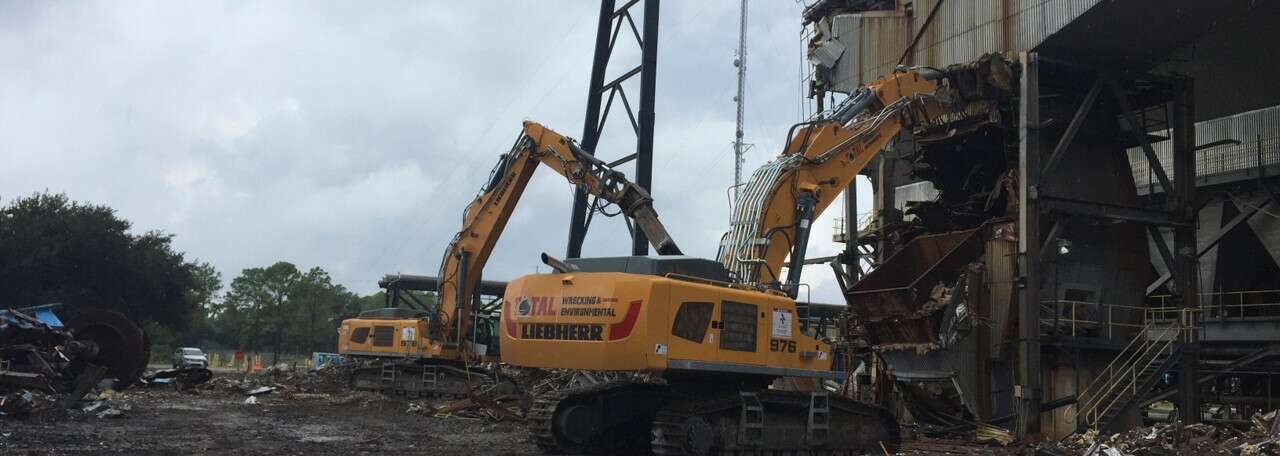
Strategic demolition: Total Wrecking dismantled the structure down to the concrete slab, which would be handled in Phase II.
-
Cost savings: Careful segregation of uncontaminated steel allowed recycling, generating up to $3 million in shared revenue for APG and Total Wrecking.
-
Problem solving: Unforeseen residual oils were discovered in pipes, which could have prevented landfill disposal. The team identified and removed all free liquids, ensuring proper waste management.
THE RESULTS:
Total Wrecking helped APG create a clear demolition timeline and a performance-based disposal plan.
Highlights of the outcome:
-
Five months of oil removal reduced contamination risks.
-
Shared walls and active operations remained untouched and safe.
-
Waste was safely segregated and disposed of in compliance with all regulations.
-
Millions in uncontaminated scrap metal were salvaged to offset project costs.
Despite the presence of PCBs, asbestos, lead paint, and complex regulations, the project was completed safely, efficiently, and cost-effectively.
With deep expertise in hazardous demolition, Total Wrecking proved to be the go-to partner for power plant owners, engineers, and industrial managers who need complex demolition handled with precision and care.
“I appreciated the ease in dealing with the Total Wrecking team, both in the field and Administratively. Total Wrecking’s willingness to accommodate changes and overcome unseen challenges kept the project running smoothly. The manner that they operated in was safe, effective and efficient. Quandel Construction would like to express our confidence in Total Wrecking and our desire to work with their team on future projects.”
Shawn Edmonds
Project Superintendent , Quandel Construction Group