Total Wrecking Safety

INTRODUCTION

Industrial demolition plays a critical role in the upkeep and development of cities around the world. However, it’s also recognized as one of the most hazardous sectors to work in.

Asbestos abatement, waste removal, and hazardous material remediation โ€” which are integral parts of industrial demolition โ€” pose unique dangers that emphasize the critical need for safety measures for everyone involved.

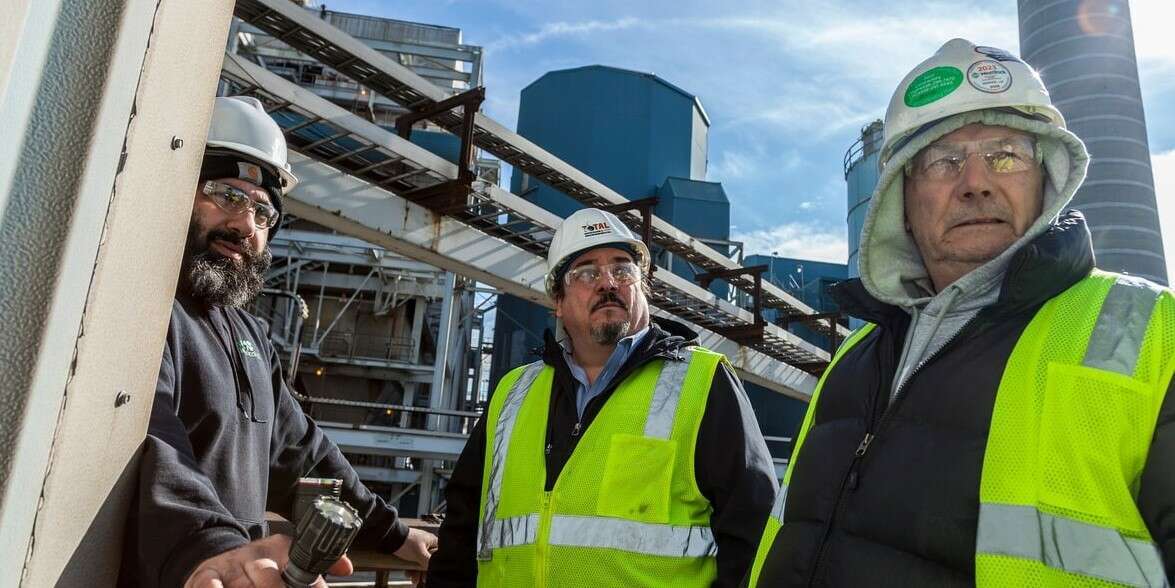
Total Wrecking & Environmental, based in Buffalo, NY, believes that safety is non-negotiable and represents the gold standard of providing top tier demolition services while upholding the highest standards of safety.

SAFETY: OUR TOP PRIORITY

According to data from the Occupational Safety and Health Administration (OSHA), workplace injuries and fatalities in the construction and demolition industry have been steadily decreasing over the years, thanks to a heightened focus on safety measures and training programs. These statistics reflect the industry’s recognition of the importance of safety and the greater efforts made by companies like Total Wrecking to protect and promote the well-being of their workforce.

The nature of demolition work, including asbestos abatement, environmental remediation, and the demolition itself โ€“ demands a higher level of vigilance and precaution. We are proud of our impeccable safety record and our stringent adherence to industry standards.

How can we ensure that safety is priority in the workplace? Our abatement team is trained rigorously and certified to handle even the most challenging situations, ensuring that our employees, clients, and the environment are safeguarded throughout every project we face.

PROFESSIONALISM: A CORNERSTONE OF SUCCESS

According to industry reports, the success of demolition projects is often closely tied to the level of professionalism exhibited by the contractors involved.

A study by the National Demolition Association (NDA) found that projects executed with a strong emphasis on professionalism achieved better safety records and experienced fewer delays and cost overruns. This underscores the significance of professionalism in ensuring the smooth execution of even the most challenging projects, and highlights why should organizations prioritize what safety measures they will focus on, and how.

At Total Wrecking, safety goes hand in hand with professionalism. Our commitment to professionalism is reflected in every phase of our projects, from initial planning to final execution.

We understand that working on complex tasks such as industrial plant demolition or building demolition requires technical expertise and a disciplined approach to project management. Our team’s attention to detail, communication skills, and ability to collaborate seamlessly with clients and stakeholders exemplify the professionalism we uphold.

SETTING INDUSTRY STANDARDS

Total Wrecking’s commitment to safety and integrity has earned us a reputation as one of the most reliable and respected names in the demolition and abatement industry in the United States.

Our partnership with organizations like the National Environmental Safety Company Inc. and our affiliation with industry associations like the NDA and OSHA are a testament to our dedication to setting and upholding the highest industry standards. These collaborations ensure that our practices and services are aligned with the latest advancements in safety protocols and environmental responsibility.

With a nationwide presence that enables us to tackle projects of all sizes and complexities, our portfolio includes everything from commercial complete demolition to industrial plant decommissioning services, each executed with the same level of professionalism and safety consciousness that defines our company.

BUILDING A SAFER TOMORROW

How do you ensure safety management? By placing safety and professionalism at the forefront, and by adhering to strict safety protocols, providing comprehensive total safety training, and investing in the latest safety equipment โ€” we contribute to the ongoing improvement of the construction and demolition sector, making it a safer and more efficient field for all.

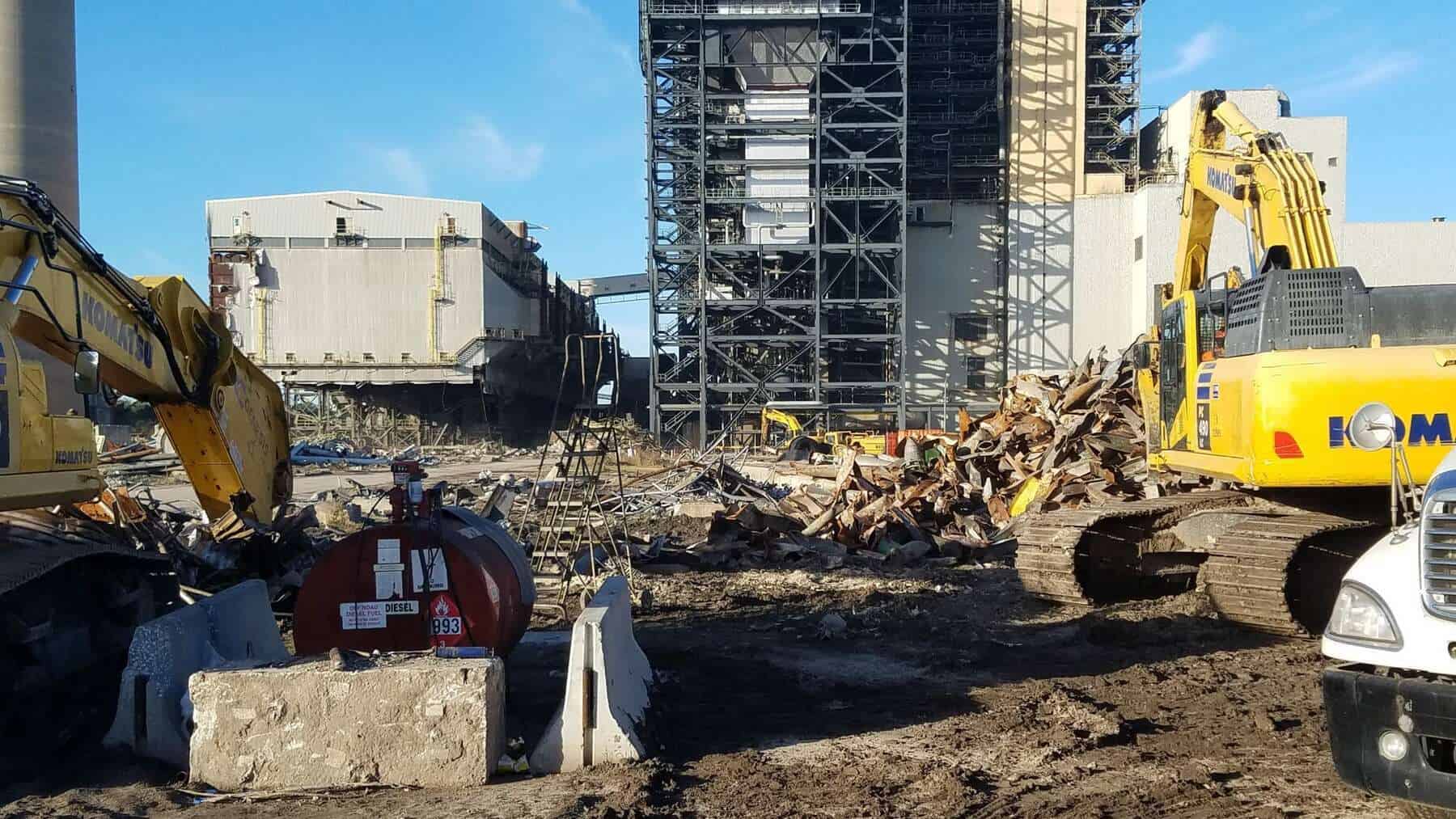
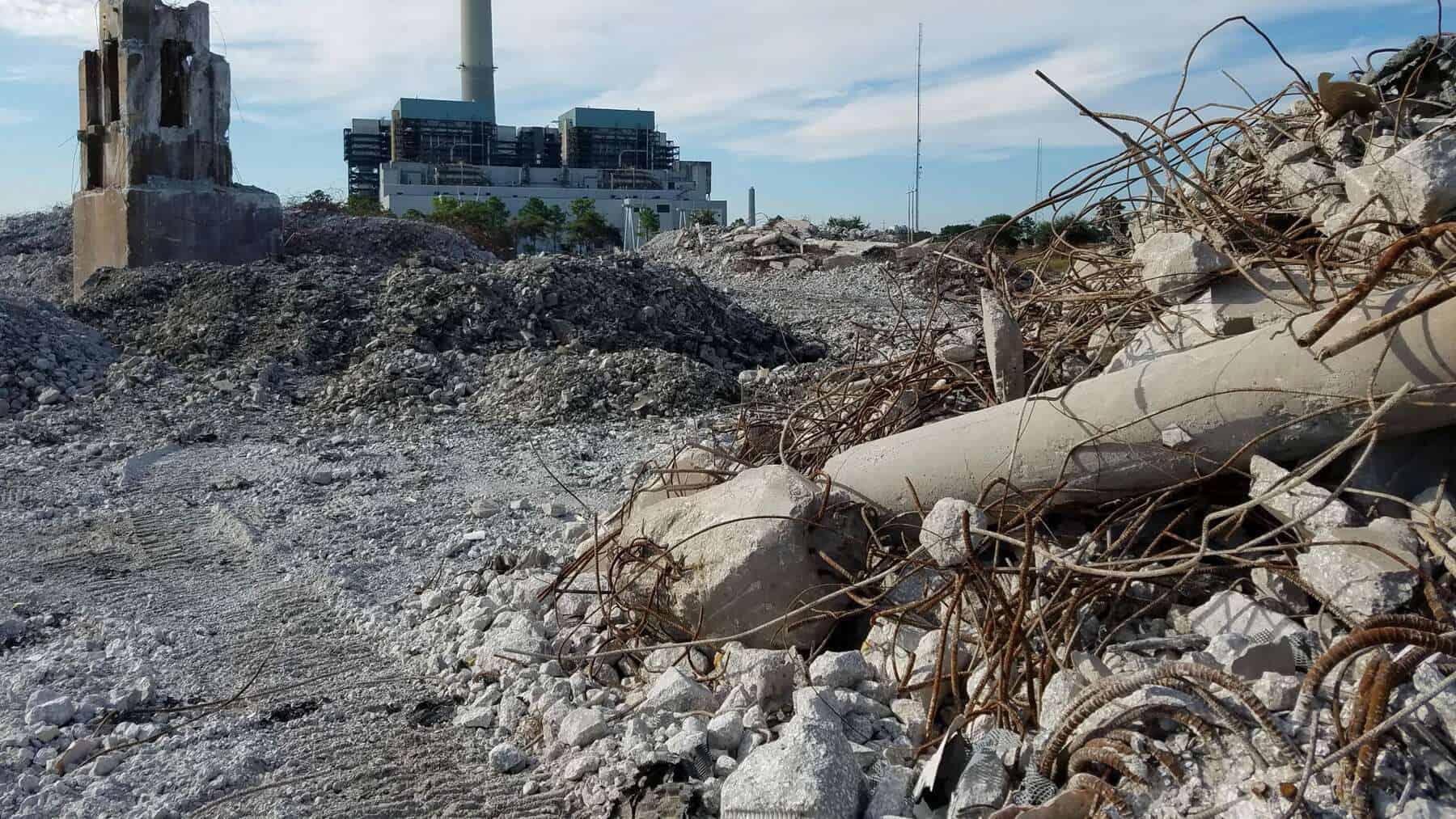
If you need an industrial demolition company, look no further than Total Wrecking & Environmental. We have extensive experience with projects of all sizes, as demonstrated by our work at the Lakeland McIntosh Power Plant in Florida. Contact us today to get started on your next industrial demolition project.
Total Wrecking Blog 4

INTRODUCTION

As Frank & Sandy Bodami look back at the first ten years of Total Wreckingโ€™s relatively short but stratospheric rise in the industrial demolition industry, it becomes clearer and clearer that itโ€™s been as much a personal journey for him as a professional one. After all, Total Wreckingโ€™s inception in 2013 was hardly the start of Frankโ€™s demo career; he looks at it as the culmination of a lifetime of experiences.

โ€œThe bigger, the betterโ€ is the biggest industry misconception heโ€™s sought to correct with Total Wrecking. Power plant and building owners tend to assume that larger companies are inherently more reliable, wrongly assuming Total Wrecking may not have the depth of experience required to handle the most complex projects in the nation. His company, however, flies in the face of that theory. Combining concierge-like customer service with a deep respect for family and community, Frank has proven that an industry with a reputation for bidding to the bottom is long overdue for disruption.

In other workplace cultures, itโ€™s perhaps become a minor cliche to look at your colleagues as family members, but that steadfast belief is what Frank largely credits with the companyโ€™s growth and success over the last decades, with only greater expansion and improvement on the horizon.

Total Wreckingโ€™s unique culture and approach is too multifaceted to list out in a single sentence, but a few of the biggest touchpoints are an earnest spirit of collaboration, support, and ongoing education; the importance of transparency and open communication in avoiding conflicts and misunderstandings; employees given feedback and opportunities to improve their performance; and a unique understanding that his customers represent partnership that extend far beyond transactions.

ORIGINS AND FOUNDATION

It takes a team to build an entity as large as Total Wrecking. When word began spreading that Frank had a bold new vision for an industrial demolition company, several former colleagues reached out to express their belief in his leadership and a willingness to work without pay to help get the business off the ground.

Inspired by their faith and dedication, Bodami began the new venture from zero with no external funding. Fortunately Frank was later able to secure a line of credit from a bank and a bonding company, providing the necessary financial backing to not only get off the ground but to begin operations.

Frankโ€™s vision was twofold: to create an environment where his team could flourish and pursue their passions, and to build a dynasty within the demolition industry known for its honest, high-quality work and a strict dedication to safety. This commitment to both people and performance has been a cornerstone of Total Wrecking & Environmentalโ€™s ethos and a huge contributor to its exponential growth and success over the past decade.

Armed with a robust business plan and deep industrial knowledge from his team, the company bid for small, industrial projects in Buffalo and secured $1.5 million in its first year. With that, they were officially off the ground.

ETHOS AND CULTURE: ACCESS, ACCOUNTABILITY, AND INTEGRITY

Inspired by the book โ€œThe Speed of Trustโ€, Frank cannot emphasize the importance of trust, honesty, and confident decision-making in his daily operations enough. Every decision is guided by a tripartite question โ€“ is it right for the client, is it right for the community, and is it right for the company?

These principles also extend to their relationships with partners in the development industry, where the โ€™30-Second Trustโ€™ rule allows for fast, informed, and reliable decisions.

Operationally, Total Wrecking & Environmental has managed to distinguish itself through their dedication to value engineering, particularly in the environmental field. They work with clients to isolate different levels of contamination, minimize costs, and offer transparent, fair, and honest solutions. Frank understands first-hand what a massive differentiator that is in an industry known for companies who often exploit issues arising on projects. He once heard a competitorโ€™s say that โ€œthereโ€™s opportunity in chaos,โ€ a concept that couldnโ€™t be farther from the heart and soul of Total Wreckingโ€™s culture.

Instead, Frank and his team of experts minimize clientsโ€™ problems, holding fast to their core values of transparency, honesty, and integrity. A happier client base has organically led to ongoing and repeat business.

Clients trust them, at least in large part, because of how clearly they convey a willingness to do the right thing and take the higher road that most demolition companies wonโ€™t. Every single job has hitches and unforeseen issues, but how they manage these situations is precisely what sets them apart. Exceptional problem management skills are crucial to the job.

Total Wreckingโ€™s core pillars of safety and integrity originate from top management and permeate throughout the entire organization. These values are constant and everyday, not opportunistic, or dependent on circumstances.

THE TOTAL FAMILY

Frankโ€™s wife Sandy, or as we like to call her, the โ€œreal boss, introduced a fourth pillar thatโ€™s embedded in Total Wrecking & Environmentalโ€™s philosophy: family. Despite the size of the company, now with 120 employees and counting, everyone is considered part of the โ€˜Total family.โ€™ This workplace idea is often preached but rarely practiced, but under the Bodamisโ€™ leadership, itโ€™s a palpable commitment.

This family approach extends beyond rhetoric. Total Wrecking provides sincere care for its employees in tangible ways, like financially supporting staff through extended illnesses and organizing events like safety summits. Frank believes employees who are fully valued and supported will reciprocate with loyalty and hard work, essential ingredients for any companyโ€™s success.

All employees, regardless of their role or position, can reach out to the top management, including Frank, directly. Although there is an established chain of command, this open-door policy allows everyone to be heard and offers employees a sense of security knowing that they can bring any concerns directly to Frank if they feel something is going wrong.

MAJOR ACCOMPLISHMENTS

The very first project for Frank Bodami and Total Wrecking & Environmental was at the Riviera Theatre in Buffalo, NY, which signified their initial foothold in the industry and established a lasting relationship with the theatreโ€™s director. This inaugural project was a small-scale industrial demolition project that marked Total Wreckingโ€™s first earnings, a humble but earnest starting point for Frankโ€™s ambitious start-up.

Another notable project was the Jacksonville Electric Authority (JEA) job in Florida, a monumental 8-figure job in the late 2010โ€™s that remains their largest to date. Given the scale and complexity of the project, this gargantuan undertaking provided them with significant notoriety and helped solidify their position in the industry.

Beyond their professional achievements, however, Frank and his team take even more pride in their community outreach and philanthropic endeavors. Witnessing the heartfelt and emotional response of a recipient of their U.S. veteran fundraising efforts deeply moved Frank and encouraged him to make greater efforts to give back more and more.

On a more personal level, Frank was also deeply humbled to receive a โ€˜rank coinโ€™ from the head of Western New York Heroes. This exclusive token is traditionally reserved for military personnel, but the head of the organization felt compelled to acknowledge the exemplary support that Total Wrecking & Environmental has provided to the military community.

NAVIGATING CHALLENGES

No worthwhile journey is ever without its hurdles.

One of the main challenges for Total Wrecking & Environmental from the outset has been proving their capabilities in an industry dominated by larger companies.

Despite the high volumes of his larger competitors, Frank understands that this doesnโ€™t necessarily translate to quality service or accessibility, a lesson heโ€™s tried hard to preach for the last 10 years. Frank worked hard to demonstrate that although Total Wrecking was relatively new, their deeply experienced team had been working in the industry for 40 + years. They werenโ€™t just the same team with a new name; they were better, smarter, unburdened by the problems of their past partnership, and ready to tackle the future.

Total Wrecking & Environmental is fully committed to placing their best teams on all projects, ensuring top quality and comprehensive safety on every job. Frankโ€™s bid strategy is also far more selective than most of his competitors โ€“ he only bid on jobs he is confident they can manage safely and effectively, a stark deviation from other companies that often overextend their resources and open the door to accidents and injuries.

Hiring and retaining the right personnel was another initial challenge, like most companies both inside and outside of the demolition space. Over time, as their people-centric approach became a more widely known cornerstone of their brand, this obstacle also slowly faded. That said, despite having a loyal core group from the outset, sourcing the best talent remains an ongoing issue in an industry with a massive workforce labor issue, particularly in recent years.

LESSONS LEARNED

One of the more unique approaches that Frank has introduced is the โ€œlessons learnedโ€ methodology. Here, the Total Wrecking team documents any and every mistake or problem, analyzes what went wrong, and pinpoints precisely how to prevent it in the future. Taking this a step further, Frankโ€™s larger goal is to create a platform to share these findings industry-wide to improve safety and efficiency efforts industry-wide. A safe space where companies can share their lessons without revealing sensitive information could significantly help train younger professionals while preventing injuries.

This โ€œlessons learnedโ€ concept is even more relevant given the ongoing workforce issue throughout every corner of construction. Documenting and sharing these lessons can help train future professionals and safeguard knowledge continuity along the way.

By sharing these lessons, businesses are not just fostering a more informed workforce but also potentially saving lives by preventing accidents or fatalities.

Despite the potential benefits, Frank understands the industryโ€™s general reluctance to share such information due to fears about reputation or legal concerns. Nevertheless, he advocates for a culture of openness, hoping to change this mindset for the betterment of the industry as a whole. At trade shows and beyond, Frank is committed to leading conversations about this topic with demolition peers to encourage a more open and collaborative culture for all.

THE TOTAL FUTURE

To stay at the top of the demolition game, Total Wrecking & Environmental continually upgrades equipment and explores innovative jobsite tools to ensure theyโ€™re working at peak operational efficiency. Frank and team actively collaborate with vendors to develop wholly unique attachments for machinery and enable seamless tool transitions to improve safety and productivity. Just this year they invested in a new fleet of CAT excavators and equipment, in addition to regularly attending trade shows to learn about and incorporate cutting-edge demolition techniques.

Participation in trade shows and conventions, in fact, is one of Frankโ€™s biggest keys to maintaining active engagement in a people-centric industry. Among many other benefits, attendance provides opportunities to share ideas with peers and learn from them, which in turn contributes to healthier operational developments and thought leadership throughout the industry.

CONCLUSION

When Frank & Sandy Bodami reflect on the last 10 years, the ongoing themes of his vision are the importance of controlled growth, fostering an immutable safety culture, and remaining dedicated to constant training. He aspires for his team to reach a level of proficiency where safety becomes second nature, where diligence and protection always take precedence over the pursuit of perfection.

Itโ€™s exactly why the company remains actively engaged in employee training, including OSHA 10 and construction courses, a commitment lacking in many other companies. Training seminars extend beyond baseline requirements and go the extra mile to include CPR, leadership, and active shooter training to ensure employee safety even outside of work.

He believes in educating clients about their capabilities and affirming that they are the best demolition and environmental company in the country, plain and simple. The growth of Total Wrecking and Environmental has been historically tied to its commitment to safety and the unique ability to attract the best and brightest minds in the industry, an approach Frank only plans on further fostering.

Aiming to stay at the cutting edge, the company has proactively invested in new technology, prioritized safety education, and maintained a strong presence in trade shows and industry associations. The deeply-embedded โ€œlessons learnedโ€ approach he created to avoid repeating past mistakes and improve operations is a practice he hopes to spread around the nation. Central to the company is a dedication to integrity and collaboration, where employees, clients, and even competitors are viewed as partners.

Thatโ€™s why ten years from now, while maintaining a thriving, safety-obsessed, forward-thinking company culture and close-knit relationships, Frank and team anticipate Total Wrecking and Environmental being covering an even larger (and more successful) footprint than ever.

Total Wrecking Blog 6

INTRODUCTION

Some contractors treat safety as a marketing slogan. At Total Wrecking & Environmental, itโ€™s a fundamental workplace practice.

Thatโ€™s why understanding OSHA (Occupational Safety and Health Administration) is so important. OSHA not only defines universal and industry-specific safety standards but also enforces them through workplace inspections and public reporting.

So, how do OSHA procedures affect demolition contractors on both daily and long-term levels? And what do recorded incidents say about the safety of a business? Letโ€™s break it down.

WHAT IS OSHA?

OSHA is a federal agency within the U.S. Department of Labor. Its mission is to ensure employers provide safe, healthy working conditions through regulations, training, education, and assistance.

Created in 1970, OSHA originally had the authority to perform random inspections. Today, its guidelines continue to reduce workplace injuries and fatalities while showing no negative impact on employment or business viability.

WHAT DOES OSHA ACTUALLY DO?

At its core, OSHA requires employers to provide workplaces free from serious hazards and compliant with safety standards. Employers must eliminate or reduce risks through safer processes, better ventilation, or engineering controlsโ€”before relying on personal protective equipment (PPE).

Employer Responsibilities

  • Inform workers of potential hazards

  • Provide safety training in necessary languages

  • Record all work-related injuries and illnesses

  • Test workplace conditions (e.g., air quality)

  • Supply PPE at no cost

  • Provide medical tests when required

  • Post OSHA job safety rights posters

  • Post citations and annual summaries of injuries and illnesses

  • Notify OSHA of fatalities within 8 hours and hospitalizations within 24 hours

Worker Rights

  • Safe working conditions free of serious harm

  • File confidential complaints for inspections

  • Receive hazard training and OSHA standards

  • Access workplace medical and testing records

  • Participate in inspections and speak privately with inspectors

  • File complaints if discriminated against for whistleblowing or requesting inspections

UNIQUE STANDARDS FOR INDUSTRIAL DEMOLITION

Industrial demolition contractors fall under OSHAโ€™s Construction Standards, which add rules for hazards common in construction and demolition. These include:

  • Fall protection: guardrails, harnesses, safety lines

  • Prevention of trenching cave-ins

  • Protection against chemical exposure

  • Special training for dangerous machinery

  • Respiratory protection for dust and fumes

  • Extra precautions in confined spaces

These rules ensure that demolition contractors address risks unique to their high-hazard industry.

HOW OSHA ENFORCES ITS STANDARDS

OSHA employs around 2,400 inspectors (including state partners) to cover 8 million workplaces and 130 million workers.

Inspection Priorities

  • Imminent danger situations

  • Catastrophes (fatalities or hospitalizations)

  • Worker complaints or referrals

  • Targeted high-risk industries or hazards

  • Follow-up inspections

On average, OSHA conducts 83,000 inspections per year, issuing fines of up to $13,000 per violation. While that number may seem small compared to the total workforce, OSHAโ€™s enforcement has significantly reduced workplace injuries and deaths nationwide.

Just as important, OSHA requires detailed recordkeeping of all injuries and illnesses in high-hazard industries like demolition. These records form the foundation of accountability and help employers and employees understand and improve safety.

WHAT IS AN EXPERIENCE MODIFICATION RATE (EMR)?

An EMR is an insurance metric that compares a companyโ€™s injury rate to its industry peers.

  • The baseline EMR is 1.0

  • A lower EMR (<1.0) means fewer incidents and lower insurance costs

  • A higher EMR (>1.0) means more incidents, higher premiums, and reputational risk

For industrial demolition contractors, OSHA recordables directly impact EMR scores. Every incidentโ€”big or smallโ€”can raise a contractorโ€™s EMR, driving up insurance rates and making clients wary of working with them.

OSHA & TOTAL WRECKINGโ€™S RECORD

Total Wrecking & Environmental is proud of its flawless safety record and industry-low EMR rating. Unlike many competitors, we have no permanent recordables in our company history.

When we share this with clients, we know it may sound like just another marketing claim. Thatโ€™s why we encourage clients to verify it themselves through OSHAโ€™s publicly available records.

You can search OSHAโ€™s database to see the full safety history of any industrial demolition contractor in the countryโ€”including ours.

CONCLUSION

For industrial demolition contractors, safety is more than complianceโ€”itโ€™s the foundation of business viability, trust, and long-term partnerships.

With OSHA standards, rigorous inspections, and EMR metrics driving accountability, only contractors with proven safety performance will continue to thrive.

At Total Wrecking & Environmental, our record speaks for itself: safe, compliant, and trusted nationwide.

Total Wrecking Blog 8

INTRODUCTION

What is environmental remediation?

In simple terms, environmental remediation is the removal of hazardous or potentially hazardous substances from a job site. The goal is to minimize waste, protect workers, safeguard the public, and prevent environmental harm.

This process is essential in industrial demolition. It ensures that contaminated materials are safely managed, instead of turning an entire site into hazardous waste.

COMMON ENVIRONMENTAL REMEDIATION SUBSTANCES

The Resource Conservation and Recovery Act (RCRA), passed in 1976, is the main U.S. law regulating hazardous waste. It requires that:

  • Hazardous waste cannot be diluted or mixed with other debris

  • Any waste derived from hazardous waste must also be managed as hazardous waste

If regulated waste is not removed before demolition, the entire debris stream could be classified as hazardous, leading to massive disposal costs and safety risks.

WHY ENVIRONMENTAL REMEDIATION MATTERS

Universal Waste

Called โ€œuniversalโ€ because itโ€™s nearly everywhere, this includes:

  • Fluorescent light bulbs and ballasts

  • Mercury switches

  • Smoke detectors

  • Lead batteries

Universal wastes are hazardous but often recyclable, which makes their management different from other regulated waste.

Asbestos

Used widely from the 1800s through the 1970s, asbestos remains a concern today. Regulations require:

  • Thorough inspections before demolition

  • Removal of regulated asbestos-containing material (RACM) before work begins

  • Compliance with federal and stricter state laws where applicable

PCBs (Polychlorinated Biphenyls)

PCBs were manufactured from 1929 until their ban in 1979. They can be found in:

  • Electrical components like capacitors and transformers

  • Caulks, sealants, and coatings

  • Some paints

Any material with 50 ppm or more of PCBs is treated as hazardous waste.

Lead Paint

Lead-based paint is common in older structures. If it is loose or peeling, it must be removed and disposed of carefully to prevent contamination of soils and demolition debris.

HOW TOTAL WRECKING HANDLES HAZARDOUS WASTE

Total Wrecking begins with an in-depth review of all environmental data, site conditions, and inspection reports. From there, a collaborative team develops a comprehensive plan that covers:

  • Waste identification and classification

  • Safe removal and handling methods

  • Compliance with federal, state, and local regulations

  • Packaging, storage, transport, and disposal requirements

This team includes:

  • Managing Member: Oversees risk, communication, and finances

  • Project Managers: Handle permitting, scheduling, and notifications

  • Superintendents: Apply decades of field experience to plan execution

  • Safety Director: Ensures compliance with OSHA, EPA, and worker safety standards

  • On-Site Safety Personnel: Develop task-specific Job Safety Analyses (JSAs)

SAFE REMOVAL WITHOUT CREATING MORE HAZARDS

Every remediation project requires a task-specific work plan. These plans identify the safest methods for removal and include measures to prevent:

  • Dust emissions

  • Vapor releases

  • Cross-contamination

For example, contaminated soil may be:

  • Placed in a contained, lined holding area

  • Loaded directly into trucks for immediate disposal after pre-sampling

Even administrative steps, like properly filling out waste manifests, are critical to ensuring safety and accountability.

WILL THE WORK FULLY REMEDIATE THE MATERIAL?

Yes โ€” but only with the right controls in place.

Total Wrecking uses methods such as:

  • Limiting exposure areas

  • Employing protective equipment

  • Adjusting for site-specific factors like wind direction

  • Choosing mechanical vs. manual removal carefully (e.g., for asbestos)

Improper handling could turn a low-risk material into a lifelong liability.

    RECORD KEEPING AND ACCOUNTABILITY

    Accountability is critical. Total Wrecking provides detailed documentation, including:

    • Waste manifests with chain of custody records

    • GPS coordinates, depths, and sampling data for excavated materials

    • Worker certifications for anyone handling hazardous waste

    • Daily site logs detailing weather, activities, safety checks, and issues

    Because hazardous waste liability is cradle-to-grave, owners remain accountable even after disposal. Thatโ€™s why proper documentation is essential.

      CONCLUSION

      Environmental remediation is not just part of demolition โ€” itโ€™s the foundation of a safe, compliant, and successful project.

      By working with an experienced contractor like Total Wrecking, owners can:

      • Reduce risks

      • Minimize costs

      • Protect workers, communities, and the environment

      If youโ€™re planning an industrial demolition project and need environmental remediation expertise, contact us today to start the conversation.

      What You Want to Know About Environmental Remediation

      1. What is environmental remediation?

      Environmental remediation is the process of removing pollution or contaminants from soil, groundwater, sediment, or surface water to protect human health and restore the environment. It involves technologies and methods tailored to specific contaminants and site conditions, ensuring that polluted areas can be redeveloped or returned to their natural state.


      2. What are the two main types of remediation?

      The two main types of remediation are:

      • In-Situ Remediation: Treating contamination directly at the site without removing soil or water. This approach minimizes disruption and is cost-effective for specific pollutants.
      • Ex-Situ Remediation: Excavating contaminated materials like soil or pumping out groundwater for treatment at another location, offering more control over remediation methods.
      3. How does soil remediation work?

      Soil remediation involves removing or neutralizing contaminants such as heavy metals, pesticides, and petroleum hydrocarbons. Techniques include:

      • Physical methods: Excavation or soil washing.
      • Chemical methods: Using oxidation or stabilization agents.
      • Biological methods: Employing microorganisms for bioremediation to naturally break down pollutants.
      4. How is groundwater contamination treated?

      Groundwater remediation methods include:

      • Pump and Treat: Contaminated groundwater is pumped to the surface, treated using filtration or chemical methods, and reintroduced.
      • In-Situ Treatments: Injecting oxidants or bioremediation agents to degrade pollutants underground.
      • Barrier Systems: Installing physical barriers to prevent the spread of contaminants.
      5. What role does bioremediation play in cleanup efforts?

      Bioremediation uses microorganisms like bacteria and fungi to degrade pollutants in soil and water. It’s particularly effective for organic contaminants like oil and hydrocarbons. This environmentally friendly method enhances natural processes, reducing reliance on chemical or physical remediation.


      6. What are the common challenges in environmental remediation?

      Challenges include:

      • Complexity of Contaminants: Mixed pollutants often require a combination of techniques.
      • Cost: Large-scale projects like Superfund sites can be expensive.
      • Regulatory Compliance: Meeting stringent environmental laws and standards can complicate projects.
      • Site Accessibility: Some contaminated sites are hard to reach or require extensive preliminary assessments.
      7. How long does environmental remediation take?

      The timeline for remediation varies depending on the extent of contamination, the chosen method, and site conditions. Smaller spills might be addressed within weeks, while large, complex sites like brownfields or Superfund sites can take several years to fully remediate.

      Environmental Remediation: what it is and how does it work

      Who is Accountable for It?

      There is no use in looking for someone to blame, since most causes of environmental hazard comes from multiple sources and chains of events. Everyone involved must sign it.