
KEY TAKEAWAYS
- Urban demolition requires precision, planning, and strict environmental control.
- Total Wrecking specializes in selective demolition in tight, high-traffic areas.
- Projects are completed safely and discreetly with minimal disruption.
- The DEQ case study proves success in sensitive, regulated environments.
- Every project is engineered for safety, compliance, and community continuity.
- Sites are left clean, controlled, and ready for redevelopment.
INTRODUCTION: WHY URBAN DEMOLITION REQUIRES CONTROL
Urban demolition is not just about tearing down buildings. It is about control.
Every move affects nearby structures, utilities, air quality, traffic, and daily operations.
In dense urban environments, even a small mistake can disrupt an entire block.
Total Wrecking & Environmental understands this responsibility.
The team treats each project like a surgical procedure.
Every step is planned.
Every risk is managed.
Every detail matters.
Whether working inside an active facility or clearing space in a tight downtown footprint, the goal remains the same:
-
Protect surrounding structures
-
Maintain safety and compliance
-
Minimize disruption
-
Deliver clean, controlled results
THE GROWING NEED FOR SPECIALIZED URBAN DEMOLITION
As cities grow, demolition projects are becoming more complex.
Today’s urban demolition sites often include:
-
College campuses
-
Government facilities
-
Hospitals
-
Correctional facilities
-
Downtown business districts
-
Aging shopping centers
These environments come with limited space, strict regulations, and tight schedules.
Redevelopment is increasing across many regions. As a result, demolition contractors must work with precision and minimize community impact.
Total Wrecking brings decades of experience to these high-profile projects. Safety, professionalism, and controlled execution guide every job.
SELECTIVE DEMOLITION IN TIGHT, SENSITIVE ENVIRONMENTS
In dense urban areas, brute force methods do not work. Precision is required.
Total Wrecking specializes in selective demolition. This approach removes specific structural components while protecting surrounding areas.
The team uses:
-
Engineered sequencing
-
Advanced demolition equipment
-
Strict environmental controls
-
Real-time monitoring systems
Key protection measures include:
-
Noise mitigation systems
-
Dust suppression technology
-
Traffic coordination plans
-
Vibration monitoring
-
Wind and water screens
-
HVAC and air system protection
Older downtown areas often contain buried infrastructure such as fiber optics, sewage systems, and utility tunnels.
These systems must remain intact.
Before work begins, Total Wrecking plans around every hidden element.
The result is demolition that happens safely and quietly while surrounding operations continue uninterrupted.
CASE STUDY: DEQ DOWNTOWN DEMOLITION PROJECT
One of the best examples of controlled urban demolition is the Oklahoma Department of Environmental Quality (DEQ) project.
The seven-story parking structure stood in downtown Oklahoma City. It was located next to DEQ’s active headquarters and across from the National Memorial & Museum. This was one of the most sensitive environments possible.
Working under Lingo Construction, Total Wrecking:
-
Stabilized the compromised structure with emergency bracing
-
Used Brokk robotic demolition units for controlled dismantling
-
Deployed a Komatsu 490 UHD high-reach excavator
-
Engineered every movement to limit vibration and noise
Advanced monitoring tools included:
-
Real-time cameras
-
Drone tracking
-
TWE’s proprietary project tracking app
-
Dust Boss suppression systems
Despite tight site access, citywide events, and severe weather, the project was completed:
-
On time
-
On budget
-
With zero safety incidents
More than 7,000 tons of material were recycled with a 99.997% recovery rate.
The project manager from Lingo Construction noted that Total Wrecking rapidly adjusted methods to overcome challenges. This flexibility defines successful urban demolition.
ADVANCED EQUIPMENT FOR CONTROLLED DEMOLITION
Urban projects require specialized tools.
Total Wrecking uses:
-
3D modeling for pre-demolition planning
-
Engineered sequencing to control removal
-
Brokk robotic demolition units for vibration-free work
-
High-reach excavators for tall structures
-
Precision shears and hydraulic grapples
-
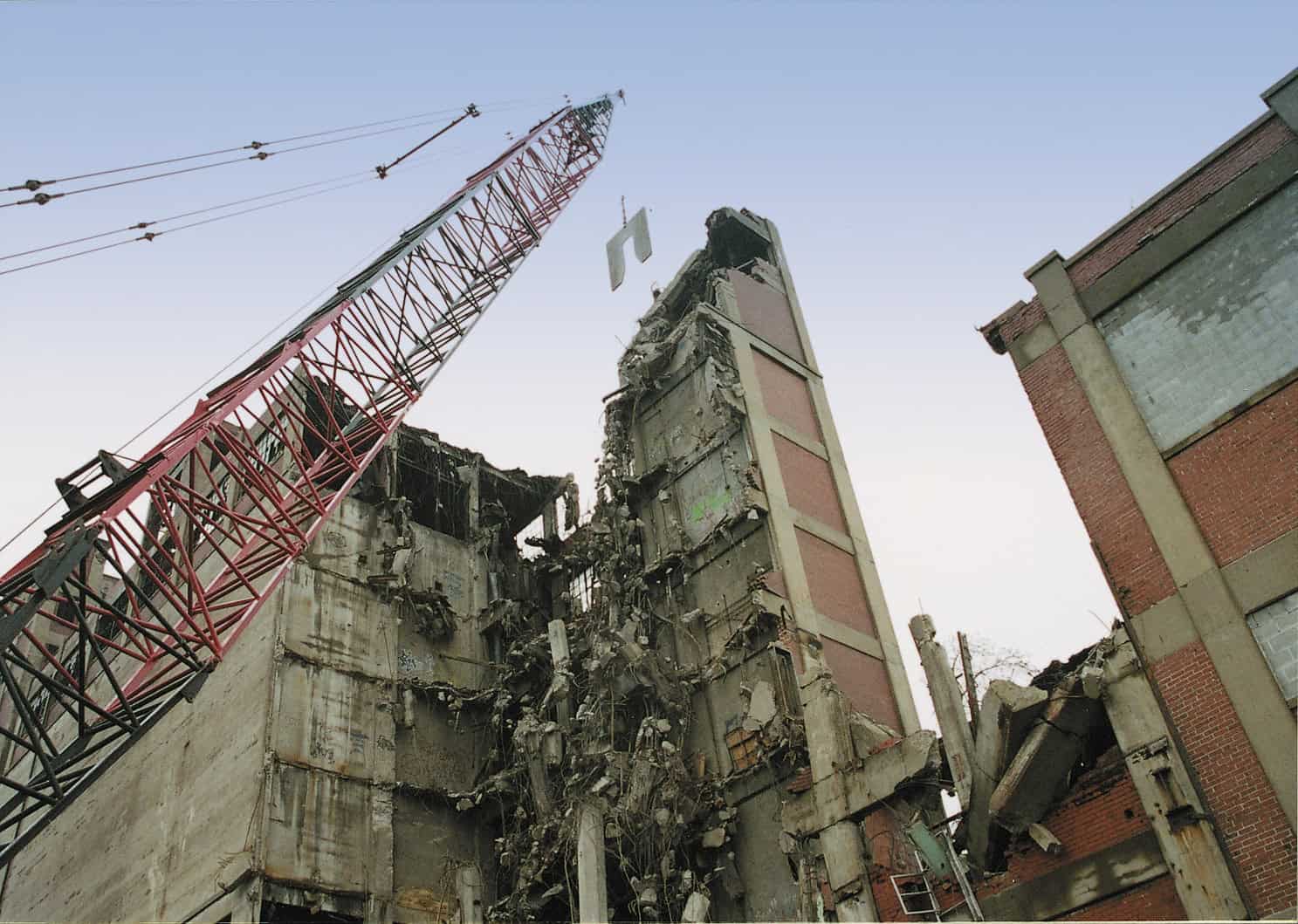
A proprietary crane-suspended demolition device
The crane-suspended system was engineered in-house. It allows controlled felling in tight urban or campus settings.
This innovation provides more control than traditional wrecking methods.
Live site data ensures each phase is monitored for safety and efficiency.
ENVIRONMENTAL COMPLIANCE AND SUSTAINABILITY
Urban demolition must meet strict environmental standards.
Total Wrecking prioritizes:
-
Air quality control
-
Dust suppression
-
Debris containment
-
Adaptive recycling strategies
Recovery rates often exceed 99%, far above industry averages.
The goal is not just demolition. It is responsible transformation.
Before work begins, the team communicates with:
-
Local residents
-
Nearby businesses
-
Public agencies
This proactive communication builds trust and helps prevent disruption. It is part of the company’s commitment to protecting communities.
TRANSFORMING SPACES WHILE RESPECTING SURROUNDINGS
Total Wrecking focuses on more than removing structures.
The team protects what surrounds the project:
-
Active labs
-
Pedestrian zones
-
Office buildings
-
Utility networks
Work is done quietly, cleanly, and safely.
Sites are prepared for redevelopment without leaving a lasting impact on the neighborhood.
This approach ensures long-term community continuity.
THE FOUR PILLARS OF TOTAL WRECKING
Every project follows the company’s Four Pillars philosophy:
-
Raving employees
-
Raving owners
-
Raving vendors
-
Raving communities
Success is not measured only by what comes down. It is measured by the positive impact left behind.
LEARN MORE ABOUT TOTAL WRECKING’S URBAN DEMOLITION SERVICES
Urban demolition requires precision.
It requires experience.
It requires control.
Total Wrecking & Environmental delivers selective demolition, controlled demolition, and environmentally compliant solutions for complex urban environments.
Explore our selective demolition services and project portfolio to see how precision and professionalism define every project.